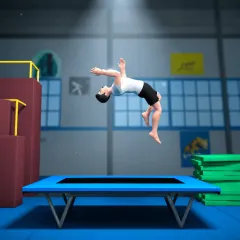
Flip Physics is a skill-based gymnastics, flip, and parkour simulation game that uses realistic ragdoll physics. The game doesn't have a button to do the flip for you. You swing on the horizontal bar, build up momentum yourself, choose when to release, and adjust your position in the air. The key from the start is that the timing of your release determines your height, direction, and number of rotations, while catching the bar is what extends the combo. Therefore, the most important question isn't which trick to perform, but when to release.
Hold down the left mouse button to build momentum and swing back and forth on the horizontal bar. Each swing increases the amplitude, and this amplitude determines how much of the flight trajectory you control. Beginners often swing a few times and then release quickly, blaming the flip. Consider the swing rhythm as preparation. Swing slowly to read the rhythm, only releasing when the amplitude is sufficient. Even a slight deviation in the release timing can change the height, direction, and number of rotations.
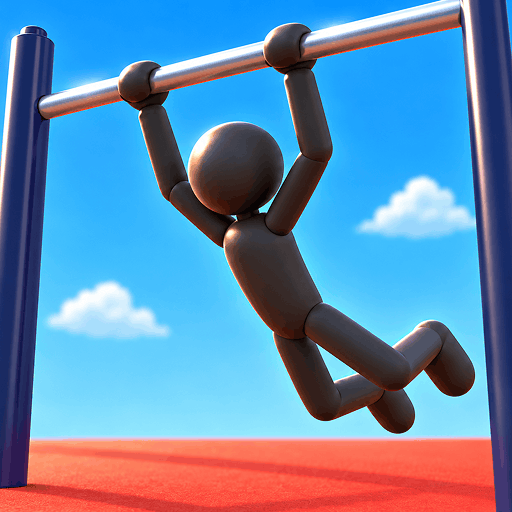
These two stances do two different things, and you have to choose the right one at the right time.
The control rhythm is quite concise. Hold the mouse to gain momentum, release to fly up, hold again to flip, and release to land. But advanced plays don't stop there. After completing the sequence of movements in the air, the character must return to the bar to catch it. Successfully catching it extends the trick, opening up a longer combo and a higher score.
This is a point many people overlook. Adding more spins is only valuable if you still have a way back to the bar. A beautiful flip that you can't catch will end your turn sooner than a simpler one that you can catch.
The game clearly shows that every fall points to a timing error. Use that:
In Flip Physics, the best player isn't the one who spins the most. It's the one who knows which swing rhythm is good enough to release, which stance suits the trick being done, and still maintains a return path to the bar. Next turn, try swinging a beat slower, releasing a little later, and choosing a flip you're sure you can catch.